Identity Verification
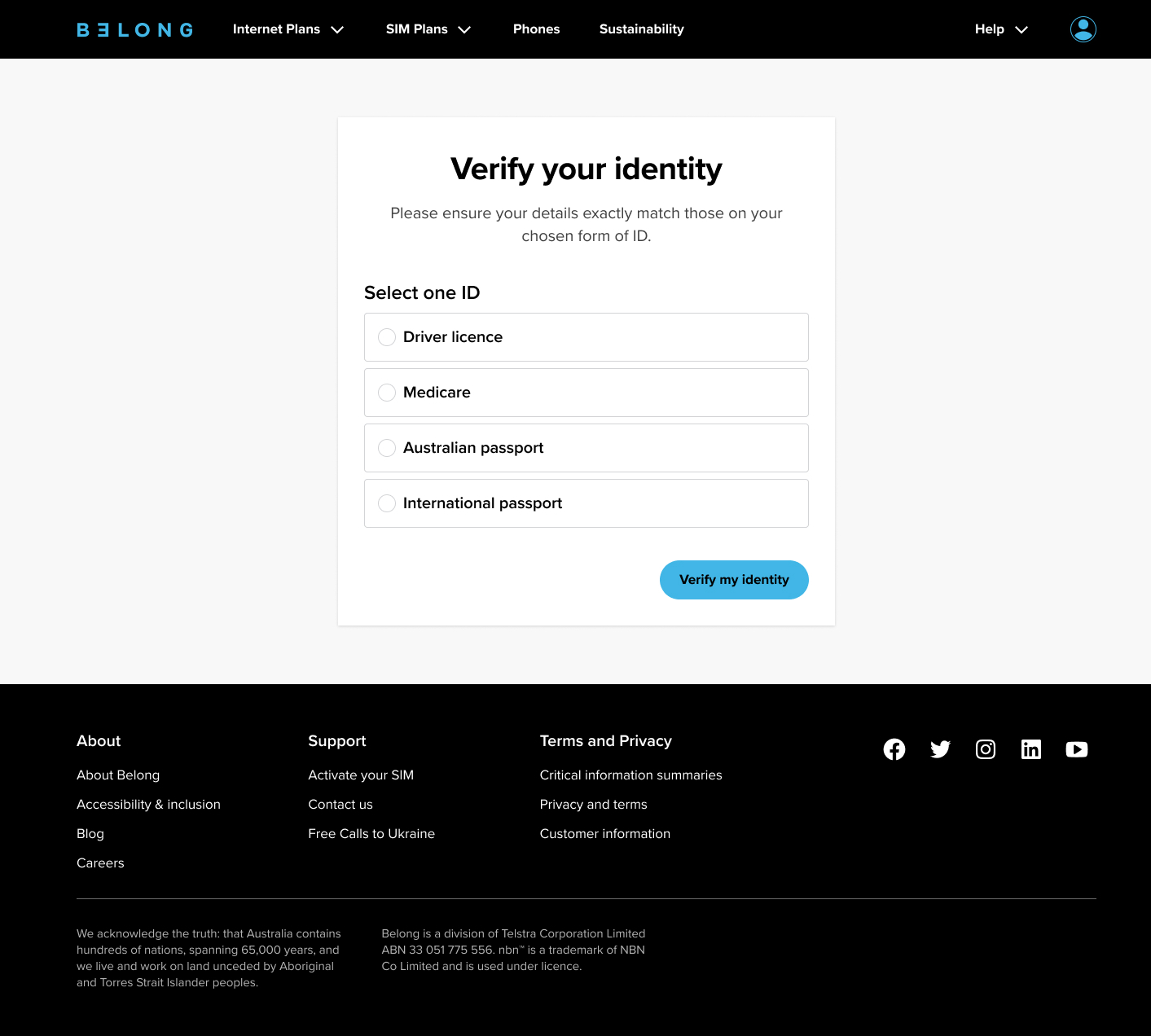
Belong, a digital brand under Telstra, offers low-cost mobile and internet plans across Australia. Originally, Belong did not verify customer identities during ordering or activation — a gap that left the business vulnerable to fraud and resulted in significant financial losses, with around $2 million lost annually in commissions.
Introducing identity verification was essential, but it came with a risk: if the process felt intrusive or confusing, it could lead to customer drop-off, increased support calls, and damage to brand trust. Our goal was to design a verification flow that delivered security without friction — one that felt simple, clear, and reassuring to customers.
My responsibilities included: Research, visual design, usability testing.
What I did
- Mapped key customer journeys to pinpoint where identity verification was most critical and high risk.
- Collaborated with product, legal, and fraud stakeholders to define verification triggers and supported methods (e.g. SMS codes, photo ID uploads).
- Audited competitor and government services to understand best practices for communicating identity requirements clearly and accessibly.
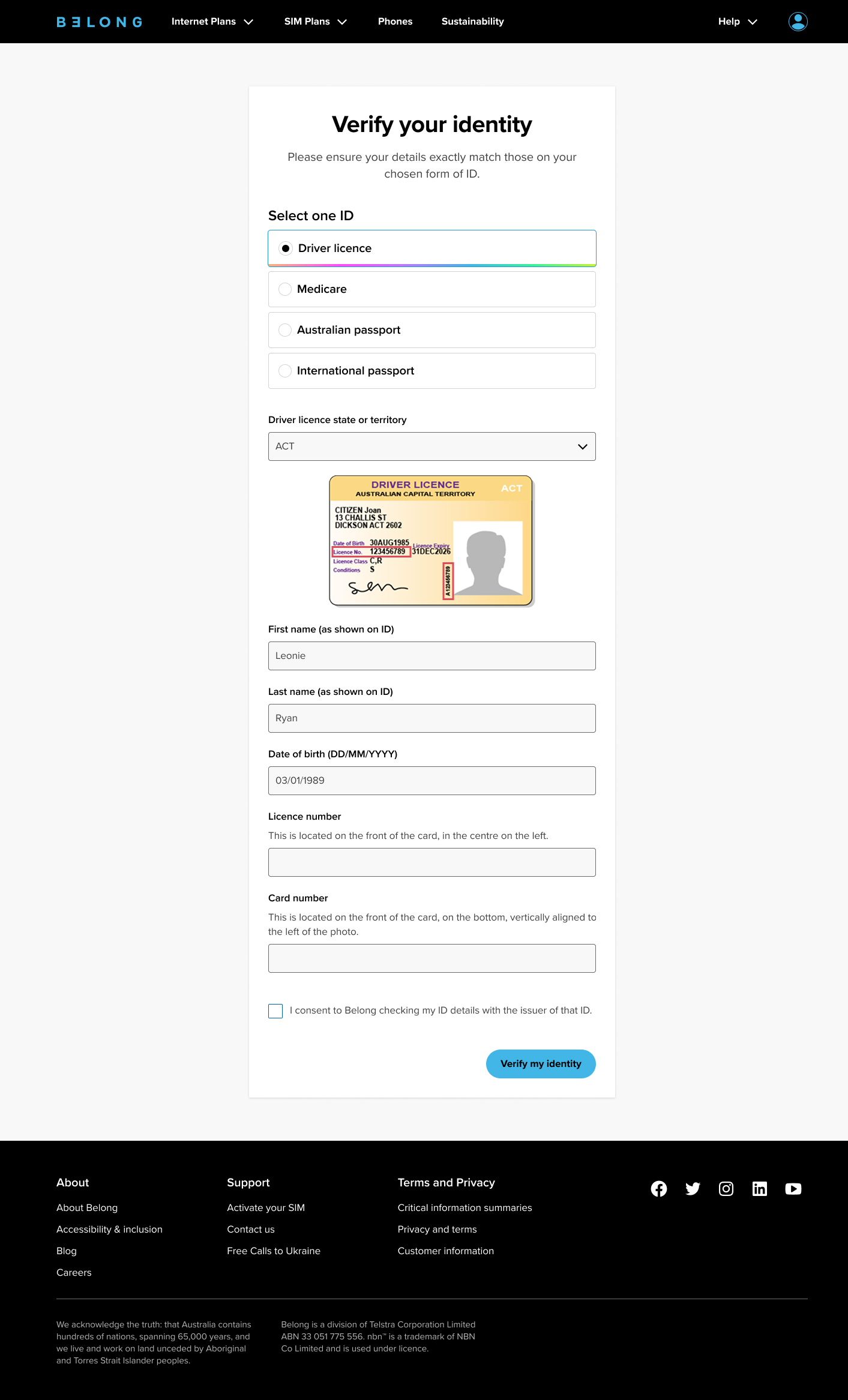
- Designed and tested progressive disclosure flows to reduce friction while guiding customers through verification with the right information at the right time.
- Developed reusable UI components and content patterns to ensure consistency, scalability, and a cohesive experience across platforms.
- Ran customer interviews and usability tests to understand reactions to identity checks and expectations around online security.
- Synthesized feedback from support tickets and call logs to identify common confusion points.
- Prioritized mobile-first design to reflect the majority of customer interactions on mobile devices.
- Ensured accessibility compliance (e.g., screen reader labels, keyboard navigation) across all verification steps.
Impact & Results
- Significant reduction in support load: Despite forecasts predicting ~4,515 calls per month post-launch, actual volumes averaged just 61 monthly (Feb–May).
- Improved customer success: 95% of customers were successfully verified, and 77% passed on their first attempt—demonstrating the impact of well-designed validation patterns, error states, and guidance.
- Improved experience for agents: Designed fallbacks from the agent’s perspective to ensure seamless transitions between self-serve and agent-assisted paths.